

Leo Yeung
Leo Yeung Position: Senior Lecturer School/office: School of Science and TechnologyEmail: bGVvLnlldW5nO29ydS5zZQ==
Phone: +46 19 301421
Room: B3307
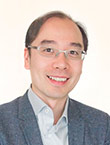
About Leo Yeung
Leo Yeung is an associate professor (docent) since June 2018. He joined the MTM Research Centre as a senior lecturer in 2016. He obtained B.Sc. (Environmental Life Science - 2003) at the University of Hong Kong, MPhil (Environmental Science - 2006) and PhD (Environmental Chemistry - 2009) at City University of Hong Kong; received post-doctoral training at City University of Hong Kong, National Institute of Advanced Industrial Science and Technology (Japan), and University of Toronto (Canada, 2010-2014). After that, he worked as a senior research associate at University of Toronto.
Research
Leo Yeung’s research focuses on per- and polyfluoroalkyl substances (PFAS) and other persistent and mobile organic pollutants, with particular emphasis on total organofluorine and comprehensive analytical strategies for assessing known and unknown fluorinated contaminants. A central component of his work is the development of innovative mass-balance and approaches that move beyond traditional targeted analysis. By combining high-resolution mass spectrometry with total organic fluorine methodologies, his research enables identification of previously overlooked substances and improves understanding of environmental and human exposure.
- His research includes:
- Development of targeted and non-targeted PFAS methods
- Mass-balance assessment of total fluorinated substances
- Environmental occurrence and global transport of PFAS Human exposure and internal organofluorine burdens
- Evaluation and verification of remediation and destruction technologies
- Safe and sustainable chemical circulation
Beyond monitoring and identification, his work has a strong solutions-oriented focus. In collaboration with authorities, industry and international partners, he develops analytical frameworks to assess treatment efficiency, transformation pathways and fluorine mass balance.
Leo contributes to international standardisation and regulatory science, including ISO 21675 for PFAS in water, and serves as Co-Chair of the AOAC International Working Group on Total Organic Fluorine. He is also active in international PFAS and waste-management initiatives. His research is supported by competitive national and international funding and conducted together with doctoral and postdoctoral researchers.
https://orcid.org/0000-0001-6800-5658
Teaching
Programme coordinators for Master's degree in Chemistry in Environmental Forensics and the Nordic Master Programme in Arctic Environmental Forensics
Course coordinators:
- KE306G Analytical Chemistry,
- KE309G Environmental Forensics,
- KE302A Analytical Methods in Environmental Forensics I,
- KE303A Analytical Methods in Environmental Forensics II,
- KE315A/KE330A/KE345A/KE360A Independent Project for the degree of Master in Chemistry
Teaching:
- KE306G Analytical Chemistry,
- KE308G Instrumental analytical methods
- KE309G Environmental Forensics,
- KE302A Analytical Methods in Environmental Forensics I
Research projects
Active projects
- Simplified strategies for comprehensive characterization of perfluoroalkyl and polyfluoroalkyl substances (PFAS) in combination with cost-effective techniques for remediation of contaminated water
- COAST PFAS - Transition Lab for Source Control, Substitution and Governance.
- Mixture-Risk
- Occurrence, distribution and toxicity of emerging perfluoroalkyl substances (PFAS) alternatives
- PAC-Risk
- PFAS-Risk
- SEASON - Seasonal variation of the fate, availability, and toxicity of priority pollutants at the sediment-water-interface
- Development of a photocatalysis method for oxidative conversion of unknown PFAS into measurable species for assessment of total PFAS in food and environmental samples including drinking water
- Development of novel porous carbon materials for reducing total PFAS emission including cost-benefit analysis and bioavailability of immobilized PFAS to terrestrial organisms.
- Science-based Management, Assessment and Remediation Technologies for PFAS (SMART-PFAS) in Circular Systems
Completed projects
- A pilot study on unidentified poly- and perfluoroalkyl substances (PFASs) in sewage in Sweden
- A temporal study on unidentified poly- and perfluoroalkyl substances (PFASs) in sewage sludge in Sweden
- Analyses of PFAS precursors and TOF in serum from individuals with a high PFAS-exposure living in Ronneby
- Evaluation of total oxidizable precursor (TOP) assay on biota samples
- Global Monitoring Plan on Persistent Organic Pollutants
- Are humans and the environment exposed to increasing amounts of unknown highly fluorinated substances?
- A pilot study on human exposure to novel poly- and perfluoroalkyl substance (PFAS) and its alternatives and total extractable organofluorine (TOF) in Sweden
- A pilot study on analytical method development and measurement of fluorinated active ingredient of Scotchgard and its levels in sludge and landfill leachate from Sweden
- Screening of total organofluorine substances (TOF) and emerging PFASs in the Swedish environment
- Screening of PFAS and total organic fluorine (TOF) in Nordic Countries
- Transfer of per- and polyfluoroalkyl substances from the aquatic environment to the terrestrial ecosystem: mechanisms and ecological effects