
Precision Toxicology Lab
About this group
Group information
Contact
Research subject
Research environments
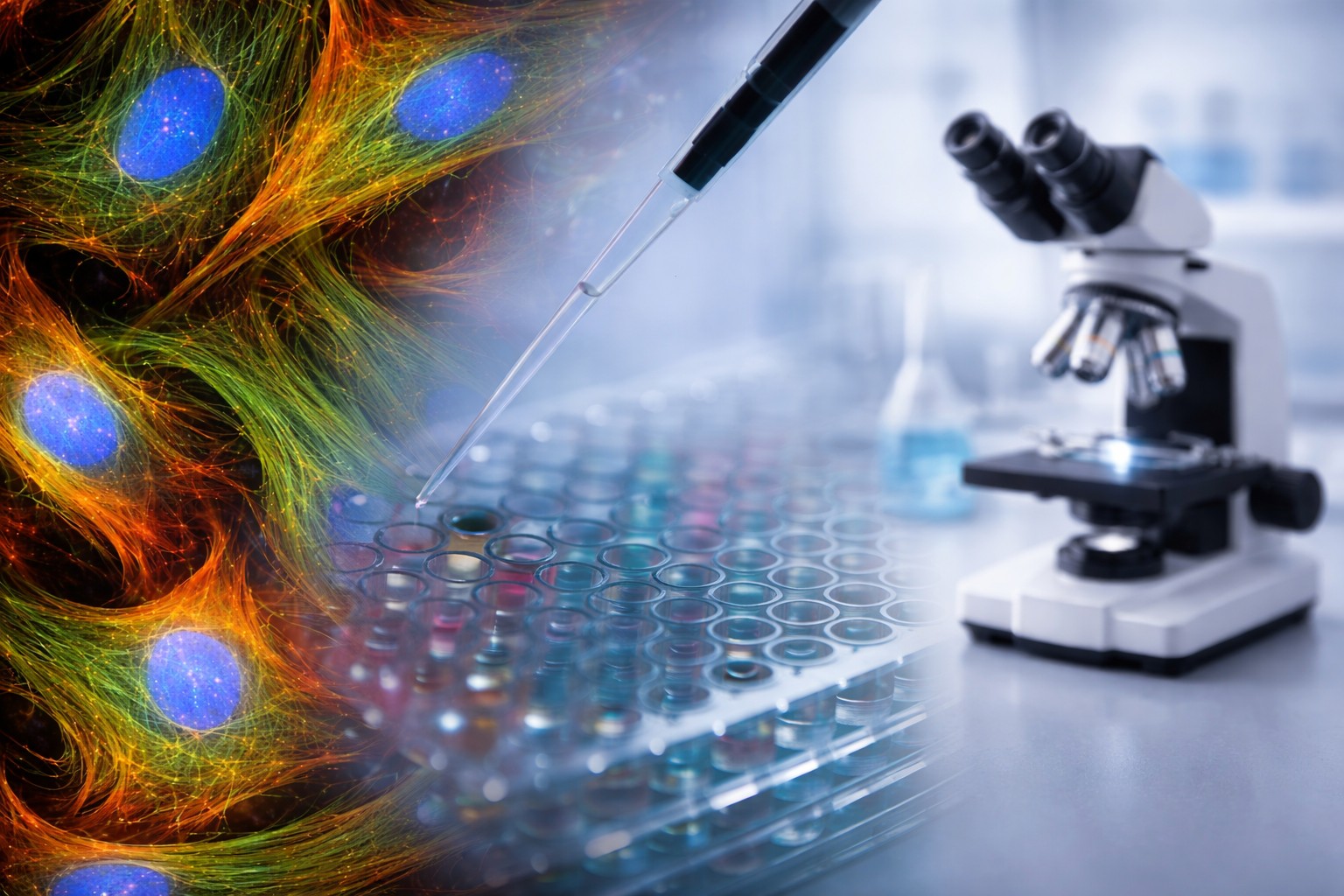
Precision Toxicology is a mechanistic, human-relevant approach that integrates advanced in vitro-ex vivo models and data-driven tools to understand how environmental exposures translate into differential health effects across individuals.
Our research group is driven by two main missions, exploring how exposure to (nano)particles and chemicals affects human health, and detecting their early biological effects. The group is led by Docent Andi Alijagic at Örebro University. A central aspect of this work is understanding (nano)particle–cell and chemical–cell interactions by using state-of-the-art exposure systems (air–liquid interface) and cellular models (both healthy and diseased 2D models, with expansion into 3D), together with high-resolution phenomics (e.g., the first applications in nanosafety) and AI-guided image analysis, targeted mechanistic and functional assays, multi-omics approaches, and the integration of phenomics and metabolomics. Collaboration with experts in biomedicine and environmental medicine is particularly important for translating mechanistic in vitro findings into human in vivo contexts. For example, the group applies non-invasive distal airway liquid biopsy using PExA technology for the discovery of early biomarkers of airborne exposure.
These strategies are used to identify early biomarkers of exposure, characterize cellular toxicity and mechanisms of action induced by engineered and incidental (nano)particles and chemicals, uncover interindividual differences in susceptibility, assess responses to tailored chemical mixtures, and clarify the influence of different exposure routes. Ultimately, this work provides insights essential for sustainable, mechanism-based risk assessment. The group is actively engaged in refining New Approach Methodologies (NAMs) for next-generation risk assessment.
Our research is conducted in close collaboration with experts across biomedicine, occupational and environmental medicine, materials science, chemistry, bioinformatics, AI, and image analysis, together with numerous national and international academic and industry partners. The team is actively engaged in interdisciplinary European research networks and collaborates closely with regulatory authorities and international expert initiatives (e.g., EU COST, KEMI, OECD), strengthening knowledge transfer and enabling cross-disciplinary cooperation.
The group welcomes students through Erasmus+ and other international exchange programs. We are also interested in hosting prospective candidates who wish to apply for the Marie Skłodowska-Curie Postdoctoral Fellowship. If you are interested, please contact Andi Alijagic: andi.alijagic@oru.se.